Hands-on review · Updated 2026
Osmio Hydrogen Water Bottle Review: Is It Worth Buying in 2026?
A borosilicate glass bottle with a proton-exchange membrane cell in the base, sold as a way to drink hydrogen-rich water at home or on the move. Below: what it actually does, where it earns its price, and where the claims run ahead of the evidence.
The short verdict
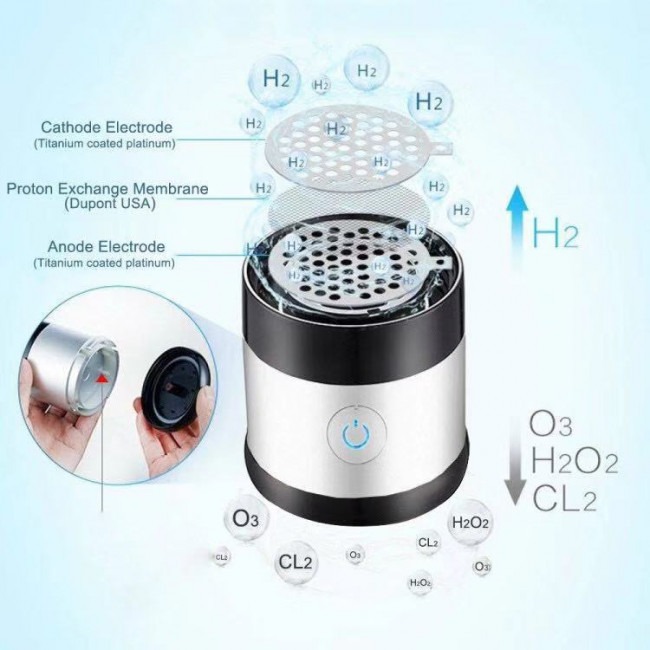
If you already drink hydrogen water and you are tired of cheap plastic generators that fade after a few months, this is a well-built upgrade: glass instead of plastic against the water, a platinum-coated titanium electrode, and a vent that pushes the oxygen and chlorine by-products out instead of back into your glass. If you are buying it hoping for a dramatic health transformation, temper that expectation — the research is early and mostly small-scale.
Worth it if
- You want glass, not plastic, touching your water
- You want a strong 7-minute cycle rather than a token one
- You travel and want to use standard PET bottles too
Skip it if
- You expect a medical-grade result
- You want something you can throw in a bag unprotected
- Your budget is closer to entry-level generators
How it works
The base holds a solid polymer electrolysis cell built around a proton exchange membrane. When you start a cycle, the cell splits water molecules and lets only the hydrogen protons pass through the membrane into the drinking chamber. The oxygen and any chlorine or ozone produced on the other side are collected and expelled through a separate waste port, which is why the bottle can be used with almost any water source without dumping unwanted gases into your drink.
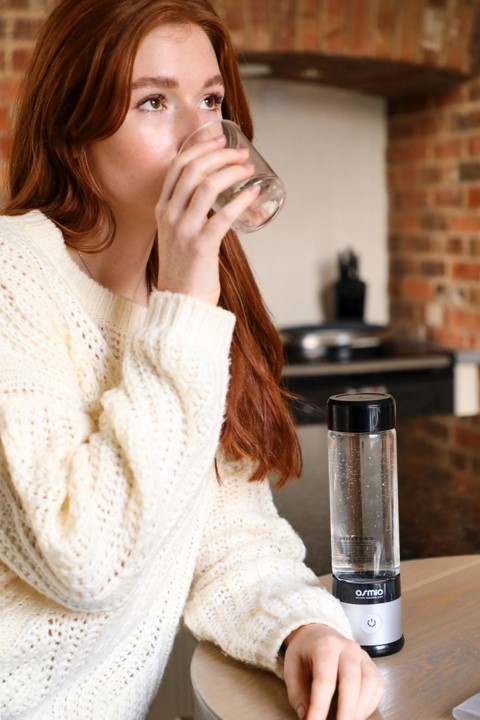
Hydrogen is a gas, not a mineral. Nothing is added permanently — which is exactly why timing matters more than with a filter jug.
Key specifications
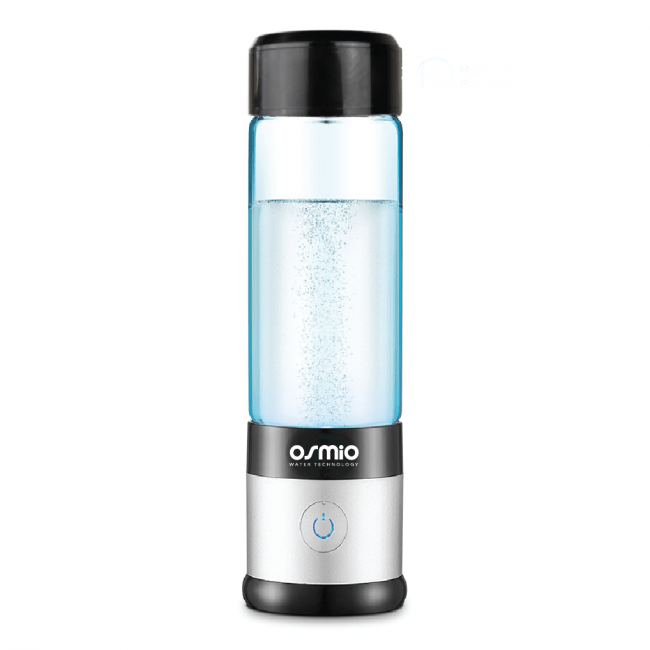
| Capacity | 400 ml glass chamber |
|---|---|
| Cycle time | About 7 minutes |
| H2 concentration | 1,100–2,000 ppb (1.1–2.0 ppm) |
| ORP value | −300 mV to −750 mV |
| Technology | PEM membrane with SPE electrolysis |
| Materials | Borosilicate glass, platinum-coated titanium electrode |
| By-product handling | Chlorine, ozone and oxides vented via waste port |
| Power | USB charging cable with mains plug |
| Extras | Nasal cannula, two PET bottle adaptors, spare washers |
Build quality and what's in the box
The parts that matter feel serious: a thick borosilicate glass body, a machined generator base, and rubber washers that seal properly instead of weeping down the side. The lid, generator cover and waste cap are plastic, but none of them sit in the water path. Alongside the bottle you get the USB power cable and plug, a generator waste cap, two adaptor sizes for standard PET bottles, a spare set of three washers, and a nasal cannula for inhalation. Worth knowing before you unbox: there is no printed manual — you scan the QR code on the carton or download the guide.

Potential benefits, honestly framed
Molecular hydrogen has been studied mostly as a selective antioxidant, and the published work is dominated by small trials and animal models. Reported effects include reduced markers of oxidative stress, less post-exercise fatigue and modest changes in inflammatory markers. Those are plausible, not proven, and nothing here treats or cures a condition.
The practical benefit users report most often is behavioural: a bottle that requires a seven-minute pause tends to make people drink more water, more deliberately. That alone is not nothing, but it is not what the price tag is for.
Safety and things to watch
- Only run the cell with water in it — dry cycles shorten electrode life.
- Empty the waste chamber after each session so by-products are not sitting against the seal.
- Glass is glass. It survives daily kitchen use but not a hard drop onto tile.
- Do not use it with flavoured drinks, juices or sparkling water; sugars and acids foul the membrane.
- If you are pregnant, on medication or managing a health condition, ask your doctor before making it a daily habit.
Getting the most out of it

- 1. Fill with cool water to the marked line — overfilling reduces the headspace the gas needs.
- 2. Seat the base squarely and run one full cycle rather than several short ones.
- 3. Drink within the first twenty minutes; that is when concentration is highest.
- 4. Rinse, empty the waste port and leave the cap off so the chamber dries.
- 5. Once a month, run a low-mineral or distilled water cycle to limit scale on the electrode.
Pricing and value
Expect to pay in the region of €195 to €250 depending on the model and where you buy. That places it above the crowd of plastic hydrogen bottles and below clinical generators. The case for the price is longevity and materials: a glass chamber and a platinum-coated titanium electrode simply outlast the cheap end of the market, where output typically collapses within a year.
Ready to compare current offers?
Prices and bundle contents change often, so check before ordering.
Frequently asked questions
How long does the hydrogen stay in the water?
Dissolved hydrogen escapes quickly. In an undisturbed open glass roughly half of it is gone after about two hours, so the sensible habit is to run a cycle and drink it straight away rather than filling the bottle in the morning for later.
Can I use tap water, or does it need to be filtered?
Tap, spring, mineral, filtered, reverse-osmosis and distilled water all work, because the cell only pushes hydrogen gas into the water and vents the oxygen. The amount of hydrogen you end up with does shift with the mineral content of your water.
Does it change the taste of the water?
Most people describe it as slightly softer or smoother rather than flavoured. If you notice any metallic or chlorine-like note, clean the waste port and run one cycle you pour away.
How often should I run a cycle?
One to three glasses a day is a normal routine. There is no benefit in running back-to-back cycles on the same water, as the water saturates and the extra hydrogen simply escapes.
Is the breathing attachment necessary?
No. The nasal cannula is an extra, not the core function. If your interest is purely drinking hydrogen-rich water you can leave it in the box.
How do I keep it clean?
Rinse the glass after each use, empty the waste chamber, and every few weeks let the base sit with clean low-mineral water to reduce scale on the electrode. Never put the electronic base in a dishwasher.
So, is it worth buying in 2026?
As a piece of hardware, yes — it is one of the better-made consumer hydrogen bottles you can buy, and the glass-plus-vented-waste design solves the two things people dislike most about budget units. As a health purchase, treat it as an experiment you are choosing to fund rather than a guaranteed outcome. Buy it because you want good water gear that lasts; anything beyond that is upside, not a promise.
This review is independent and informational only. It is not medical advice.